How to Match a Pendant With the Right Chain: A Fine Jewelry Style Guide
The right chain does more than hold a pendant. It completes the composition, balances the proportions, and lets the jewelry's character come through.
A pendant often draws all the attention. It may be the diamond that first catches the eye, the gold medallion that carries personal meaning, or a gemstone chosen for its color and character. Yet the chain supporting the pendant is far more than a practical detail. It affects how the pendant sits, moves, draws attention, and ultimately how the entire necklace feels when worn.
Pairing a pendant with the right chain is therefore less about following rigid rules and more about understanding balance.
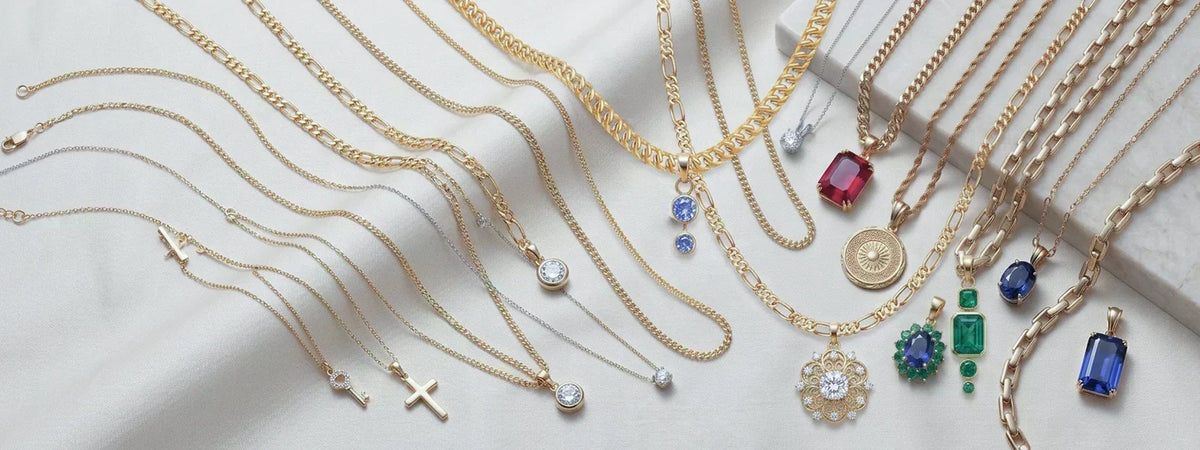
A delicate diamond pendant calls for a different approach than a substantial gold medallion. A bold statement pendant may pair well with a substantial Franco or Rope chain, while a refined gemstone pendant may look most natural on a simpler chain that keeps the stone as the focal point.
For both new buyers and experienced jewelry collectors, understanding this relationship makes it easier to create a necklace that feels intentional rather than assembled.

Why the Chain Matters as Much as the Pendant
In fine jewelry, designers rarely consider individual elements in isolation. The metal proportions, gemstone scale, setting construction, and how a piece rests against the wearer all contribute to its character. The same principle applies when pairing a pendant with a chain.
A chain can quietly frame a pendant, allowing its details to take center stage, or become an important part of the overall visual statement. Neither approach is inherently right or wrong; what matters is whether the two pieces complement each other.
Consider a petite natural diamond pendant. A very heavy chain may overwhelm its scale and draw attention away from the stone. Conversely, a substantial gold pendant on an extremely fine chain can look visually unbalanced and may not provide the support the pendant needs. The goal is harmony. This is why experienced jewelry buyers consider not only what they like individually, but also how each piece works as part of the whole.

Diamond Lock Pendant Shop Now |

One Row Custom Diamond Name Pendant Shop Now |

Diamond King Lion Red Rubies Eyes Shop Now |
Start With Proportion: Pendant Size and Chain Weight
One of the simplest ways to match your pendant and chain is to consider their relative scale.
There is no universal formula for the perfect combination. Pendant construction, chain design, metal, weight, and personal preference all matter, but some general principles can guide the decision.
Delicate Pendants
Small diamond pendants, petite initials, understated crosses, and delicate gemstone designs often pair best with a refined chain.
A slimmer chain preserves the necklace’s delicate appearance while keeping the pendant as the visual focal point. This combination works especially well for everyday jewelry, when the goal is subtle sophistication rather than a dramatic statement.
Medium-Sized Pendants
A pendant with a stronger presence can support a chain with greater visual weight.
Here, the chain does not need to disappear behind the pendant. Instead, it can complement the pendant's proportions, creating a cohesive necklace that feels substantial without becoming overpowering.
Larger or Heavier Pendants
A larger pendant requires careful consideration of both aesthetics and construction.
A substantial pendant may need a chain that supports its weight securely and comfortably. Consider the chain's construction, thickness, clasp, and overall quality rather than choosing based solely on appearance.
This distinction matters: visual proportion and physical support are related but not the same. A chain may look well suited to a pendant yet still be unable to support its weight or accommodate its attachment method.

Match the Chain Style to the Character of the Pendant
Chain design has its own visual language. Dayyani's recent guide to gold chain styles describes Rope, Franco, Cuban, Figaro, and Byzantine chains as having distinctive patterns, textures, movement, and character. When pairing a pendant with a chain, consider whether you want those qualities to remain understated or to become part of the overall statement.
Rope Chains
Rope chains have a distinctive twisted appearance that naturally catches light across their textured surface. A finer Rope chain can pair beautifully with a meaningful pendant, adding subtle dimension. A heavier version can make a statement on its own, especially when worn with a larger gold pendant. Because Rope chains already offer considerable visual texture, they work especially well with pendants featuring clean silhouettes.
Franco Chains
Franco chains have a structured, substantial appearance, making them a natural choice for larger pendants. Their architectural character complements larger gold pendants and designs meant to make a confident statement. The key consideration is balance: when both the pendant and chain are highly substantial, the result should feel deliberate rather than visually crowded.
Cable and Refined Chain Styles
A simpler chain design can be ideal when the pendant itself is highly detailed. This is especially true of diamond pendants, intricate gemstone designs, or pieces with meaningful engraving. A restrained chain lets the eye move naturally toward the pendant instead of competing with it.
Figaro and Other Distinctive Styles
A chain with a distinctive link pattern can add personality even before you add the pendant. When choosing a distinctive chain style, consider whether the pendant shares its visual character. A classic pendant can feel more contemporary when paired with a more substantial chain, while an ornate pendant may benefit from a quieter foundation. The best pairing isn't necessarily the most elaborate; it is the one where the elements make sense together.

14KT Solid Box Link Yellow Gold Chain Shop Now |

14KT Solid Rounded Franco White Gold Chain Shop Now |

14KT Solid Rope Yellow Gold Chain Shop Now |
Match the Metal: Gold Pendants and Gold Chains
Metal color is another important consideration. For many buyers, the simplest approach is pairing yellow-gold pendants with yellow Gold Chains, white gold with white gold, and rose gold with rose gold. This creates visual continuity and a cohesive look.
However, matching metals does not mean you have to avoid contrast. Two-tone jewelry can intentionally combine different shades of gold, while a pendant in one metal can sometimes be paired with another to create a more contemporary effect. The difference lies in the intention.
If you are combining metals, look for a reason that makes the contrast feel deliberate rather than accidental.
Consider karat when purchasing gold jewelry. Gold purity affects the metal's composition and characteristics, so buyers should understand what they are buying rather than choosing based solely on color.
Ultimately, the right metal pairing depends on the pendant, chain, wardrobe, and the style the wearer wants to express.
Diamond Pendants Need a Chain That Lets the Stone Speak
A diamond pendant has a distinctive relationship with light. Its design may be delicate and understated, or it may feature multiple diamonds in a more elaborate setting. Either way, the chain should support the pendant without competing with it.
For a petite diamond pendant, a refined chain can keep the stone as the primary focus. With a larger or more intricate diamond pendant, a stronger chain may provide the right proportion. The goal isn't to make the chain disappear entirely, but to ensure it enhances the pendant rather than distracts from it.
This is especially important when choosing natural diamond jewelry. Dayyani Jewelers specializes in natural diamonds, precious metals, and natural gemstones, while prioritizing client education on diamond quality and craftsmanship.
When a diamond holds significant personal or financial importance, the surrounding details deserve the same thoughtful consideration as the stone itself.

Layered Diamond Heart Pendant Shop Now |

Key to My Heart Diamond Pendant Shop Now |

Baguette & Round Diamond Heart Outline Pendant Shop Now |
Don't Forget the Bail
One of the easiest details for a new jewelry buyer to overlook is the bail, the small component that connects the pendant to the chain. Although it may seem minor, the bail plays an important role in determining which chains fit the pendant and how the piece will sit when worn. Its size, shape, and construction should work comfortably with the chain, allowing it to pass through without restriction while keeping the pendant in a natural position.
A chain may look like the perfect match from a style perspective, yet still be unsuitable if it doesn't fit through the bail or causes the pendant to twist or sit awkwardly. Proportions matter as well. A substantial chain paired with a very delicate bail can feel visually unbalanced, while a fine chain attached to a large pendant may not provide the support the piece requires. Taking a moment to consider the relationship among the bail, chain, and pendant can make a meaningful difference in the finished necklace's appearance and wearability.

1.60 Inch Sun Memory Diamond Pendant Shop Now |

1.20 Inch Cluster Memory/Picture Diamond Pendant Shop Now |

2.10 Inch Thorn Memory/Picture Diamond Pendant Shop Now |
Chain Length Changes the Entire Look
Width and weight are only part of the equation. Length can dramatically alter a pendant’s character. A shorter necklace places the pendant prominently near the collarbone, while a longer chain gives the same pendant a more relaxed appearance. The ideal length depends on the pendant's scale, the wearer's proportions, the neckline, and its intended use.
Consider how the pendant will interact with the clothing beneath it. A delicate pendant may disappear against a busy neckline if its placement is overlooked. A larger pendant can be especially effective when it has enough surrounding space to remain visually distinct.
Length also matters when layering necklaces. A pendant needs enough separation from neighboring chains to remain recognizable instead of getting lost among the layers.
The goal isn't simply to choose a fashionable length, but to choose one that lets the pendant sit naturally and be appreciated.

Match Your Pendant and Chain to Your Personal Style
Jewelry is most compelling when it reflects the person wearing it. Some buyers prefer understated pieces that fit into their everyday wardrobe. Others appreciate the confidence of a substantial gold necklace that commands attention. Still others create layered combinations that change from one occasion to the next. A few approaches can help show what’s possible.
Understated: A fine chain with a petite diamond or gemstone pendant creates a refined everyday look.
Classic: A traditional gold chain paired with a meaningful pendant can become a piece that stays relevant for years.
Bold: A substantial chain paired with a larger pendant makes a more commanding statement.
Contemporary: A clean, structured chain can give a traditional pendant a more modern feel.
Layered: A simple pendant chain can become part of a collection featuring different lengths, textures, and proportions.
None of these approaches should dictate what you wear. Fine jewelry is ultimately personal. The best Style Guide is the one that helps you understand why a combination works, so you can make the choice your own.
A Simple Checklist Before You Pair Them
Before purchasing a chain for a pendant or a pendant for a chain, consider these seven questions:
1. Is the chain suitable for the pendant's weight?
Aesthetic compatibility should never take precedence over practical support and construction.
2. Do the proportions feel balanced?
Consider the pendant’s scale in relation to the chain.
3. Do the metals complement each other?
Matching gold colors can create cohesion, while mixed metals can offer deliberate contrast.
4. Does the chain fit through the bail?
Never assume compatibility based on appearance alone.
5. Is the length right for how you plan to wear it?
Consider necklines, layering, and whether you plan to wear the necklace every day or only occasionally.
6. Does the chain compete with the pendant?
The most elaborate chain is not necessarily the best choice.
7. Does the combination feel like you?
The most successful jewelry is often the jewelry that feels natural to wear.
When the Best Pairing Is Custom
Sometimes, finding the ideal pendant-and-chain combination as a ready-made pairing can be difficult. A pendant may have unusual proportions, a cherished family heirloom may need a new chain, or a buyer may have a very specific vision involving gold color, chain weight, gemstones, and pendant design. That is where custom jewelry can be especially valuable.
Dayyani Jewelers works with clients to create bespoke jewelry, drawing on its design and manufacturing capabilities to develop pieces tailored to individual preferences. Its custom process includes design consultation, detailed specifications, and in-house production by its team of craftspeople and bench jewelers.
For clients who want a pendant and chain to feel as though they were conceived as one piece, this approach can provide a level of control that standard combinations cannot always offer. Custom jewelry is not simply about creating something unusual. It can also involve refining the proportions, metal, setting, scale, and finish until the final piece feels distinctly personal.

Gradual Round Diamond Pendant Shop Now |

One Row Custom Diamond Name Pendant Shop Now |

Rich Solid Gold Pendant Shop Now |
The Right Chain Completes the Story
A pendant may catch your attention first, but the chain determines how it enters the world. It shapes proportion, movement, comfort, and presence. It may quietly support a diamond pendant or become an equally important part of a bold gold necklace. It can emphasize tradition, introduce a contemporary edge, or simply make a meaningful piece feel more like your own.
Pairing a pendant with a chain is ultimately an exercise in balance. Consider the pendant's size and weight, then look closely at the chain's construction and character. Think about the metal color, length, bail, and how the necklace will fit into your existing collection. Most importantly, consider what you want the finished piece to communicate.
At Dayyani Jewelers, that attention to detail is central to the fine jewelry experience. With expertise in natural diamonds, precious metals, natural gemstones, and custom jewelry, the focus extends beyond each individual component to the quality and character of the finished piece.
Because the finest jewelry is rarely just about what catches the eye first. It is about how every detail comes together and how naturally the finished piece becomes part of your story.


Written by Steve Golosin