
Article: Solid Gold Bracelet Types: A Guide to Cuban, Byzantine, Rope & More

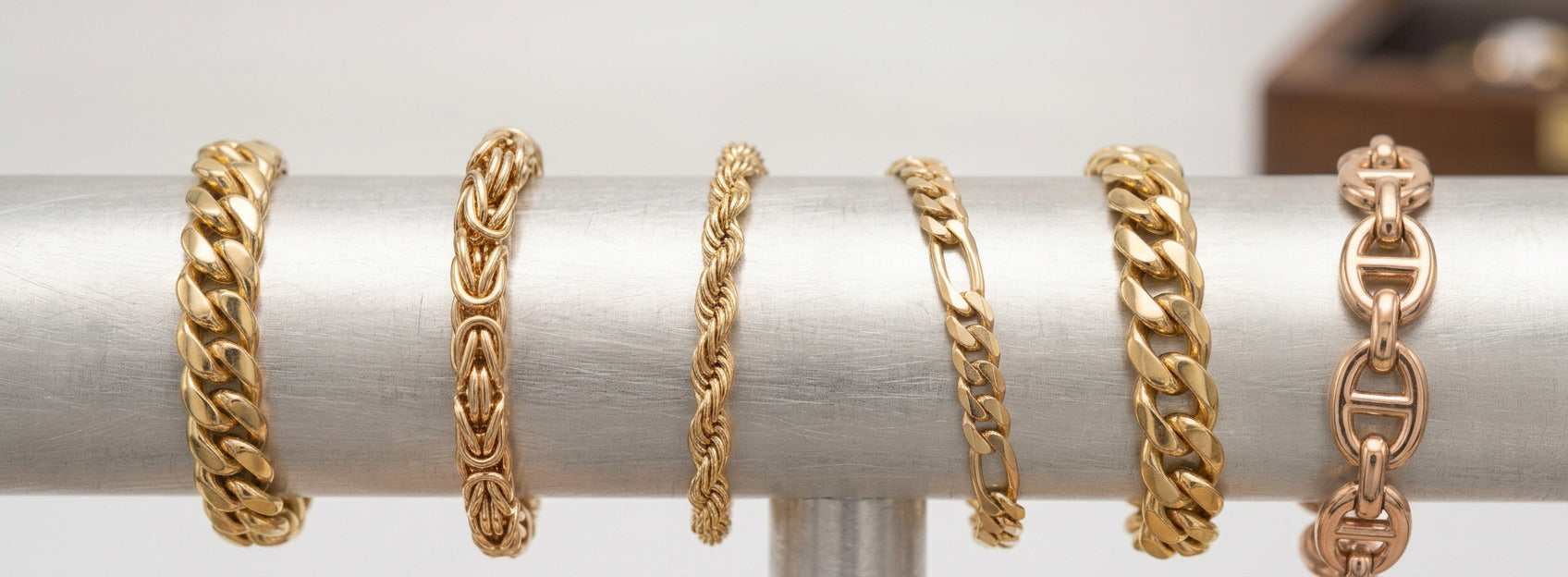
Solid Gold Bracelet Types: A Guide to Cuban, Byzantine, Rope & More
From the commanding presence of a Cuban link to the intricate movement of Byzantine and rope designs, the architecture of a gold bracelet can be as distinctive as the person who wears it.
Few materials in jewelry are as expressive as gold. Its warmth, weight, and natural luminosity have made it a symbol of prosperity, celebration, and permanence across generations. Yet gold itself is only the beginning of the story.
How a jeweler shapes and connects that gold determines how a bracelet ultimately looks and feels. A broad, closely interlocking link can create a sense of strength. A woven construction can feel intricate and almost architectural. A twisted design can bring movement and texture to the wrist. Even subtle differences in proportion can transform the character of a piece.
This is what makes choosing a solid gold bracelet more interesting than simply choosing among yellow, white, or rose gold. The link pattern becomes part of the jewelry's identity and, over time, part of your own.
From classic Cuban and curb links to Byzantine, rope, Figaro, mariner, and other distinctive constructions, these are among the most enduring solid gold bracelet styles to know.
The Art of the Gold Link
A fine gold bracelet exemplifies perfect proportion. At first, the eye may notice only its silhouette, but closer inspection reveals craftsmanship in the links' thickness, curvature, spacing, polish, and movement. A bracelet should feel luxurious yet not bulky, with links that connect securely while remaining flexible for natural wrist movement. Surfaces can be polished for reflection, textured for contrast, or shaped to create specific light patterns. This explains why two bracelets of the same gold purity can have distinct personalities.
Gold purity, indicated by karat, measures the gold content in an alloy, as explained in Dayyani Jewelers' guide, Understanding Gold Purity and Karat. After choosing the metal, the design and craftsmanship largely shape the wearing experience. Essentially, the link pattern defines the bracelet's architecture.

14KT Rose Gold Solid Miami Cuban Link Bracelet Shop Now |

14KT Yellow Solid Gold Double Miami Cuban Link Bracelet Shop Now |

14KT Yellow Gold Solid Rope Gold Bracelet Shop Now |
Cuban Links: A Language of Presence
Few bracelet designs have achieved the recognition of the Cuban link. Its appeal begins with its structure: closely connected links form a dense, continuous chain, often with a broad, polished surface that reflects light as the bracelet moves. There is a confidence in that geometry. Unlike more delicate chains, a substantial Cuban link remains visible on the wrist, offering weight, definition, and a distinct silhouette. This presence has contributed to its status as a lasting symbol of modern luxury. It pairs well with tailored outfits and casual wear, and its proportions can suit different tastes.
A thinner Cuban bracelet can be subtle, while a wider, heavier version makes a bold statement. Therefore, proportion is crucial when selecting a Cuban bracelet: it’s not just about width, but how that width complements the wrist, personal style, and other jewelry. A well-crafted Cuban link’s appeal does not rely on decoration; its gold, geometry, and craftsmanship speak for themselves.
Byzantine: When Gold Becomes Architecture
The Byzantine bracelet employs a more detailed approach to gold craftsmanship. Instead of a simple pattern of repeating links, it features multiple interwoven components that form a woven, highly textured surface. From afar, it may look like a seamless band, but on closer inspection, its intricate construction becomes clear. This style is especially captivating because its ornamentation arises from the metal itself, without the need for gemstones. The links produce texture, shadow, and reflection through their intersections. As the wrist moves, different parts of the pattern come into view, giving the bracelet a fluid, dynamic appearance.
Byzantine jewelry appeals to collectors who value craftsmanship and invites closer examination. Unlike a Cuban bracelet that emphasizes the strength and clarity of each link, Byzantine focuses on the relationships and intricacies of the connections. This subtle but significant difference is characterized by bold repetition for impact, versus detailed richness for complexity.
Rope: Movement Written in Gold
A rope bracelet possesses a unique kind of beauty. Its design features a twisting, spiral-like pattern, creating a sense of continuous movement in the gold. Rather than a broad, flat surface, the bracelet's form features alternating ridges and angles that interact dynamically with light. This makes the visual texture livelier and more engaging. As the bracelet moves on the wrist, its twisted surfaces catch light from various angles, producing a subtle sparkle purely from its shape and finish. Rope designs thus feel both timeless and energetic, blending the classic charm of traditional gold chains with a richer texture than simple links. Proportions also shape their impact: a delicate rope bracelet can be a refined accessory, while a bolder style becomes a statement piece.
Dayyani's solid gold collection showcases rope bracelets in yellow gold and other metals, demonstrating how variations in color, proportion, and finish can create different personalities within this familiar construction. For those who value texture but prefer something more understated, a rope bracelet is a graceful, versatile option.

14KT Solid Byzantine Gold Bracelet Shop Now |

10KT Solid Two-Tone Gold Figaro Bracelet Shop Now |

14KT Yellow Gold Herringbone Gold Bracelet Shop Now |
Figaro: The Beauty of Rhythm
Some bracelet designs gain character through repetition, while others do so through variation. The Figaro falls into the latter category. Its signature pattern alternates longer links with groups of shorter ones, establishing a rhythm that naturally guides the eye along the bracelet. This rhythm gives Figaro its unique personality, recognizable yet not overly ornate, traditional yet lively. The restrained pattern adds a certain elegance; it offers enough variation to be visually interesting while maintaining an overall sense of order through repetition.
Figaro is ideal for those seeking a classic gold bracelet with a touch more movement. It also creates a nice contrast when paired with more uniform link styles. In fine jewelry, small differences in proportions, such as a longer link, a narrower connector, or a different surface finish, can significantly change how a bracelet looks on the wrist.
Curb Links: Classic Proportion, Modern Confidence
Curb links share visual traits with Cuban bracelets, which can lead to confusion. Both feature closely connected, substantial links. The key difference lies in shape, proportions, profile, and construction, not a single defining feature. This matters when shopping for fine jewelry, as broad design categories don't guarantee quality; assess each piece individually. A well-crafted curb bracelet is highly versatile: its links form a smooth surface that looks refined in smaller sizes and commanding in larger ones. The design emphasizes proportion and the richness of gold, avoiding unnecessary detail.
For those seeking a bracelet that exudes elegance and confidence without excessive ornamentation, a curb link provides a stylish, balanced choice.
Mariner Links: A Nautical Heritage
Mariner, or anchor, links add a new visual element to the wrist. They typically feature elongated oval shapes with a central bar, reminiscent of traditional maritime chains. This nod to heritage offers more than nautical charm; the central bar creates a bold graphic pattern, while the open links set them apart from denser styles. As a result, Mariner bracelets can feel both substantial and airy. Their visual impact varies with size: larger links highlight their architectural nature, whereas smaller ones create a subtler look.
For collectors familiar with more common link styles, a Mariner bracelet offers a distinctive silhouette while preserving the timeless allure of gold.
Franco and the Beauty of Surface
Some of the most captivating gold bracelets stand out not only for their links but also for how those links are cut and polished. Franco-style designs are a great example. Their closely connected construction creates a seamless, flowing look, while angled or flat surfaces can enhance reflection. This underscores an important aspect of fine jewelry: brilliance isn't limited to diamonds. Gold interacts with light in unique ways: a polished surface reflects broadly; angled edges produce sharper flashes; textured finishes scatter light into smaller planes. A bracelet's craftsmanship influences its durability, movement, and luminosity.
For those drawn to jewelry's visual appeal but who favor pieces made of precious metal, a well-crafted link bracelet offers striking dimension without the need for gemstones.

14kt Semi-Solid Puffed Mariner Link Yellow Gold Bracelet Shop Now |

14KT Solid Hermes Link Yellow Gold Bracelet Shop Now |

14KT White Gold Solid Rounded Franco Gold Bracelet Shop Now |
Choosing Between Gold Bracelet Styles
By this point, it’s clear that choosing a bracelet involves more than picking a pattern that looks attractive. The real question is: what kind of presence do you want your jewelry to have? A Cuban link commands authority with its bold, architectural look. A Byzantine bracelet is more elaborate, rewarding close attention to its detailed construction. A rope bracelet emphasizes movement and texture, while a Figaro creates a rhythmic pattern through alternating links. A curb bracelet provides a timeless structure, and a mariner offers a more distinctive silhouette. Franco and other specialized link styles highlight geometry, surface, and reflection. No style is objectively better; the best choice depends on the character you want your piece to convey.
Width, Weight, and Proportion Matter
A common mistake when choosing a bracelet is focusing too much on its style name. For instance, a Cuban bracelet can look very different based on its width and link proportions. The same applies to rope, Figaro, curb, and mariner styles. Width affects how prominent the bracelet looks, while weight affects both its presence and how it feels when worn. Link size determines how much space the pattern takes up on the wrist. Therefore, evaluate a bracelet in relation to the wearer's proportions rather than as an isolated feature.
A bold bracelet can be striking when its size is deliberately chosen, and a more delicate bracelet can be equally elegant if its subtlety suits the wearer. Ultimately, the key is achieving balance.
Gold Purity and the Experience of Wearing It
Selecting a bracelet involves more than just its design; the type of gold used is equally crucial. Like other premium gold jewelry, the karat indicates the proportion of pure gold in the alloy. Higher-karat gold contains more pure gold, while lower-karat versions include more alloy metals, influencing color, hardness, and other characteristics. For everyday wear, many prefer 14K gold because it balances gold content with durability. Some may choose 18K if purity is their main concern. Yellow gold has a warm, classic appearance, while white and rose gold provide different aesthetic options. Ultimately, the best choice depends on how you plan to wear the bracelet and the qualities you value in the metal.

A Bracelet as Part of a Personal Collection
A fine bracelet isn't isolated; over time, it becomes part of a collection that reflects its creator's personality. Some opt for a single, statement-making bracelet as their signature, while others build diverse collections with varying textures and link styles, each serving a different purpose. For example, a polished Cuban can sit alongside a more delicate rope bracelet, and a Byzantine pattern can add texture next to a simple curb link. A mariner link can introduce a geometric touch to a traditional collection.
Matching all pieces isn't necessary; deliberate contrast often yields a more refined look. The same principle applies to pairing a gold bracelet with a watch: focus on scale, finish, and metal color rather than matching everything perfectly. A bracelet should enhance the wrist without overshadowing it.
Caring for a Solid Gold Bracelet
A fine gold bracelet is meant to be worn, but thoughtful care preserves the qualities that made you choose it.
Avoid exposing the bracelet to harsh chemicals, abrasive materials, or activities that could cause impact. Regular wear may gradually stress clasps and connections, especially in more detailed designs. When not in use, store the bracelet separately from other jewelry to prevent scratching and tangling. It's advisable to have a professional inspect it periodically, especially if you wear it often. A jeweler can catch wear and loose connections early. This is especially important for intricate bracelets; complex designs benefit from regular maintenance to preserve their value.

The Enduring Character of Solid Gold
Gold bracelets hold a special place in fine jewelry for good reason. They can be celebratory without feeling formal, luxurious without being overdone, and deeply personal without explanation. A bracelet might commemorate an achievement, mark a milestone, serve as a meaningful gift, or simply symbolize a personal investment in a keepsake. The design itself tells part of that story.
The bold geometry of a Cuban link, the detailed craftsmanship of Byzantine, the flowing movement of rope, the rhythmic pattern of Figaro, and the classic curb each offer a unique expression of the same remarkable material. For the thoughtful jewelry lover, recognizing these differences enhances the experience of choosing a bracelet. It's not just about buying gold; it’s about selecting a shape, a proportion, a handcrafted piece, and a style that can become a meaningful part of your story for years.
At Dayyani Jewelers, this approach guides our commitment to fine jewelry. With expertise in natural diamonds, precious metals, gemstones, custom designs, and luxury watches, we focus on understanding what makes each piece exceptional and meaningful. For those eager to combine the beauty of gold with the brilliance of diamonds, there's a whole new world of bracelet design waiting to be explored.
In 'Diamond Bracelet Types: Tennis, Cuban, Baguette & More', we examine how diamonds alter a bracelet's style: from the consistent sparkle of a tennis bracelet to the striking presence of diamond Cuban links and the sleek lines of baguette diamonds.
Whether you favor the subtle richness of solid gold or the unmistakable shine of diamonds, the most memorable jewelry isn't just about appearance. It gains significance through what it symbolizes and stays personal long after the special occasion that brought it into your collection.